Zero In on…Cummins’ X15 Natural Gas Overview
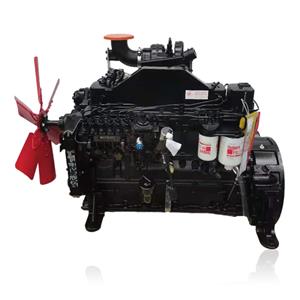
Jim Park: The X15N, Cummins’ new natural gas engine, made a heck of a splash at ACT Expo in Anaheim this year. It’s no longer seen as a bridge engine between diesel and batteries. Judging by the response from fleets at the show, this engine is going mainstream.
Cummins had spent six years developing this engine for the North American market. During that time, about 50,000 trucks in Asia and Australia had already logged more than 2.5 revenue miles with this game-changing engine.
It went into production last fall in Jamestown, N.Y. The first Kenworth and Peterbilt trucks to roll off the line fitted with the engine showed up on dealer lots shortly after.
Peterbilt offers the engine on its Model 579 on-highway chassis and the Model 567 vocational chassis. It’s also available on the low cab forward Model 520.
Kenworth offers the X15N in the T680 and T880 on-highway and vocational models. And Daimler announced a few weeks ago at ACT Expo that it’s now taking orders for the engine in fifth-generation Cascadia trucks.
I’ll offer up my on-road driving impressions of the engine in the other X15N video. You’ll want to check that out. But first, here’s Patrick Wallace, Peterbilt marketing manager for alternative powertrains, with a quick walkaround of this new engine.
Patrick Wallace: Today we’re going to take a look at our X15N-powered 579 Ultraloft. So, this is a great truck for over-the-road applications – a great truck for linehaul. We wanted to show customers that you can use a natural gas engine in a linehaul applications, and we want to highlight some of the features of this new integration today.
It looks a little different than a diesel engine. What you’ll see right here is an intake manifold where we inject the natural gas. It has a valve with eight injectors, basically, that inject the natural gas, kind of similar to a gasoline engine.
It does have a throttle body and throttle blades, similar to a gasoline engine as well, and then it has a mixing plate. So once the gas is injected, it mixes it up with the air, and then they go to the individual runners to enter the combustion chamber.
In this application comes really worked hard to integrate it, integrate the powertrain, make the engine and transmission integrated. So they worked with their Eaton Endurance, to optimize the drivability and the fuel economy.
This engine and this application for over-the-road gets up to 10% better fuel economy than an equivalent ISX12N, and so it’s just a really great step forward for customers. They’ve also improved drivability and response. So it’s very responsive. It has really good low-speed maneuverability. And as you can see, it’s well packaged and integrated from the factory. So, you’ll get this engine from the factory and ready to go into your operation.
Jim Park: The fuel system and the tank package on this truck is from Cummins’ in-house, CNG tank supplier, Cummins Clean Fuel Technologies.
The tank package is installed just down the street from Peterbilt’s Denton, Texas manufacturing plant by Custom Vehicle Solutions, owned by Rush Enterprises. Fueling the truck is safe and easy.
The connection point is engineered and tested to be virtually driver-proof. It’s made of stainless steel, and it will withstand a very strong pull, I’m told. The fuel door is equipped with a sensor to prevent engine start up if the door is open. This is intended to prevent a driveaway with the fuel hose connected. And fuel stations must be equipped with breakaway fuel hose connections.
This truck holds about 175 diesel gallon equivalent of natural gas. A fast fill takes about 20 minutes and fills the tanks to about 80% capacity. A six- to eight-hour slow fill tops the tanks right up.
And there’s one more upside to the natural gas-powered X15N. The aftertreatment system is an upgraded version of the familiar passive, three-way catalyst used in other natural gas engines. It requires no additional fluids or prescribed maintenance, and it weighs only about 100 pounds.
Maintenance was a persistent complaint with previous natural gas engines. The intervals were short and the oil drains and spark plug changes were not synchronized. As Patrick Wallace explains, that has all been resolved with the X15N.
Patrick Wallace: One of the great things about this engine is the improved maintenance intervals. So it does have spark plugs, because it is an ignition engine, similar to a gasoline engine, instead of compression ignition, like a diesel.
And with that, you are going to have to change spark plugs. Cummins worked hard to improve that maintenance interval. They went from 40,000 miles to 60,000 miles, and they did that just by picking a really good spark plug.
And they optimized a combustion chamber to take heat away from the spark plug to make it so it works a lot better and preserves that spark plug life.
Another thing I want to point out is that they’ve added oil capacity to get that oil change interval closer to a diesel engine.
Jim Park: So there’s a quick overview of the X15N. There’s more to it than we have time for here. But here are a few key takeaways: at 500 hp and 1,850 lb.ft. of torque, it’ll keep up with the big dogs.
It burns cheap and plentiful natural gas, and it produces fewer harmful emissions than a diesel. It’ll also burn very green renewable natural gas, otherwise known as biomethane. Does it really offer diesel-like performance? We’ll answer that question in the next video. Click on the links in the description below to read more about the engine and renewable natural gas on trucknews.com
Reporting from Denton, Texas, I’m Jim Park.
http://www.dieselpartworld.com/